Very dangerous
Physalia physalis
Siphonophore (Physaliidae)
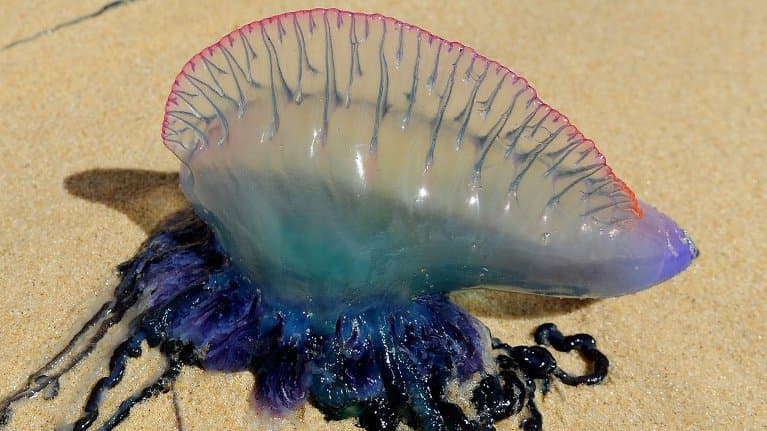
Technically not a jellyfish, but a siphonophore: a colony of specialized organisms (clones) living together. Warning: its venom remains highly active even several days after stranding on dry sand.
Sting symptoms
Very dangerous. Searing pain, whip marks, risk of anaphylactic shock, malaise, or heart problems.
Identification
It doesn't swim. You spot its asymmetrical gas-filled float (the "pneumatophore"), pink, blue, or purplish in color, topped with a crest. Very long, deadly blue tentacles trail beneath the surface.
Size
Float: 10 to 30 cm / Tentacles: up to 30 meters!
Habitat
Floats on the ocean surface at the mercy of the winds.
Scientific family
Siphonophore (Physaliidae)
Community photos
Photos submitted and verified by Meduseo users. (293)

17/09/2026
Zarautz
17/09/2026
Zarautz

17/09/2026
Santander
17/09/2026
Santander

17/09/2026
San Vicente de la Barquera
17/09/2026
San Vicente de la Barquera

15/09/2026
Suances
15/09/2026
Suances Marea baja con 3 medusas

14/09/2026
Getaria
14/09/2026
Getaria

14/09/2026
Zarautz
14/09/2026
Zarautz

13/09/2026
Colunga
13/09/2026
Colunga

13/09/2026
Gozón
13/09/2026
Gozón

12/09/2026
Valdáliga
12/09/2026
Valdáliga

12/09/2026
Comillas
12/09/2026
Comillas

11/09/2026
Gijón
11/09/2026
Gijón

10/09/2026
Santander
10/09/2026
Santander Me encontré con dos arrastradas hacia la orilla, me tuvieron que avisar mientras me bañaba. En la primera playa del Sardinero. Por lo visto había 3